How to attract birds

Start with habitat, not guesswork: fresh food, shallow water, nearby cover, lower risk, and a setup that matches the season.
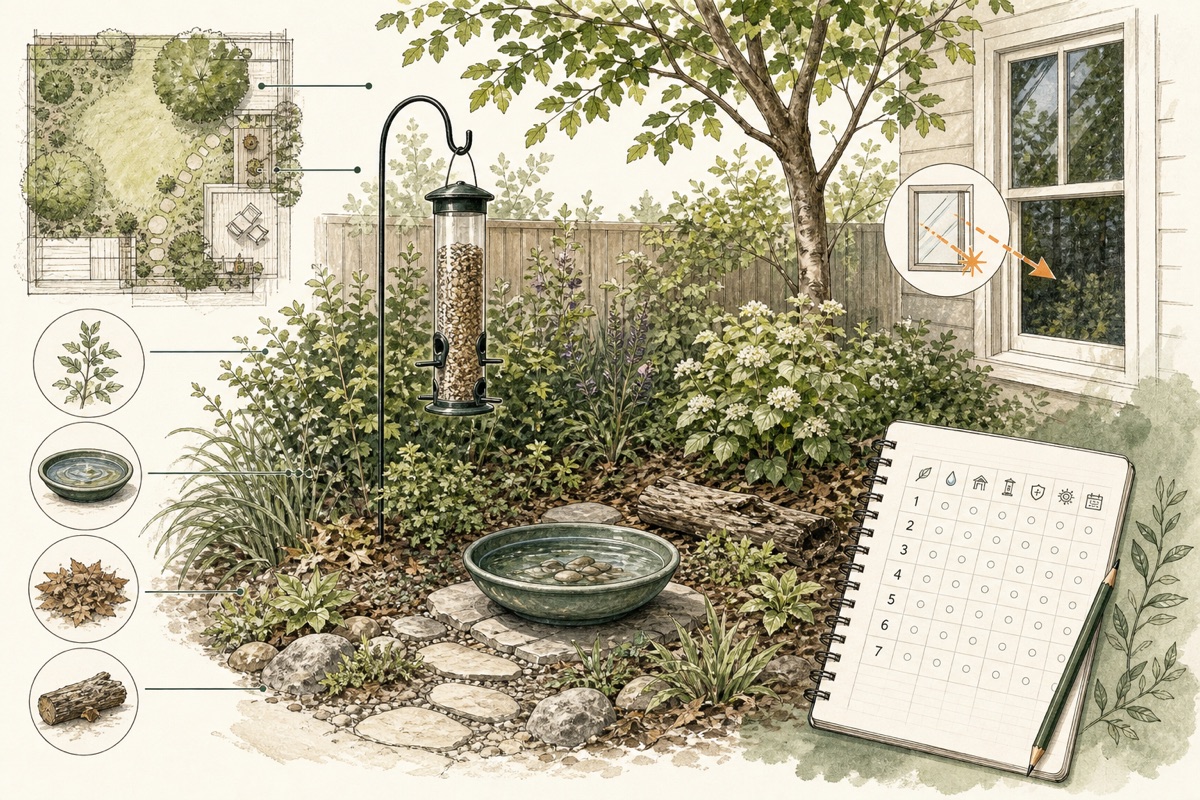
Field-guide style backyard habitat plan with feeder, shallow water, native plants, and window risk markers, with no birds shown.
Use the yard like a small habitat map: place food and water near cover, then remove the risks that make birds avoid it.

Bird Attraction Planner

Answer a few questions. Get a score and a 7-day action plan.

habitat-first

Before changing the setup

  • Clean the station and remove wet or stale food.
  • Check whether birds can approach from cover without flying toward glass.
  • Make one change, then watch several mornings before changing another variable.

Morning watch log

Use the same two short windows each day. The goal is to see whether the yard is becoming safer and more predictable, not to keep changing the setup.

Record First visit time, bird group, food or water used, approach route, and whether anything startled the birds.
Change only if The same blocker repeats for several mornings: dirty food, no water use, exposed approach, cats, glass risk, or no visible route from cover.
Keep still if Birds are testing the feeder or bath briefly. Short visits are useful evidence; daily moving can reset trust.
Your yard readiness cardRun the planner
Fix firstChoose your yard situation above.
Why

The planner will show the weakest habitat factor before you add more food or buy another feeder.

This week

Make one change, then watch several mornings.

Stop if

Pause if birds look sick, food spoils, cats patrol, or window strikes happen.

Your 7-day plan

    The order matters

    Most yards fail because one basic condition is missing. Work in this order before buying another feeder.

    1. Make it safe.Handle cats, glass, spoiled food, and disease risk first.
    2. Make it findable.Place food or water where birds already move between cover and open view.
    3. Make it repeatable.Keep water fresh, food dry, and changes slow enough to measure.

    How to attract birds by need

    How to attract birds starts with the same five field needs on almost every page: food, water, cover, safety, and season. Use these paths when you want to attract birds without turning the yard into a risky or messy feeding site.

    FoodAttract birds with fresh food matched to the birds already nearby.
    WaterAttract birds with shallow clean water they can find and leave safely.
    CoverAttract birds with shrubs, native plants, and safer approach routes.
    SafetyAttract birds only after checking windows, cats, disease, and spoiled food.

    Food Finder

    Choose by bird group, season, and cleanup risk. Food only works when water, cover, safety, and cleaning are handled too.

    Open selector
    Black oil sunflowerSeedMany feeder birdsKeep dry; manage hull waste. Hulled sunflowerSeedSmaller spacesLess hull mess; spoils faster when wet. Striped sunflowerSeedLarger-billed visitorsOften less useful for small birds. SafflowerSeedCardinals and some songbirdsUse with cover and calm placement. NyjerSeedFinches where presentUse clean small-seed feeders. White milletSeedGround-feeding sparrow-type visitorsOffer sparingly; prevent ground buildup. Simple seed mixSeedTesting local preferenceAvoid filler-heavy mixes that become waste. Cracked cornSeedLimited ground feedingUse cautiously; can create waste and pests. PeanutsNutJays, chickadees, woodpeckersUse unsalted only; avoid mold. Peanut piecesNutSmall feeder visitorsUnsalted only; keep dry and clean. SuetHigh energyWoodpeckers and cold-weather visitorsAvoid rancid or melting suet in heat. No-melt suet-style cakesHigh energyWarm-weather cautionStill monitor freshness and cleanliness. MealwormsInsect foodBluebirds where habitat fitsUse restraint; habitat and nest boxes matter. Dried mealwormsInsect foodOccasional supportDo not use as the whole plan. Sugar-water nectarNectarHummingbirdsNo dye; clean and refresh on schedule. Native tubular flowersNectar plantHummingbirds and insectsChoose regionally appropriate plants. Orange halvesFruitOrioles during the right seasonRemove before spoilage or insects build up. Apple or pear piecesFruitSeasonal fruit-eating visitorsSmall amounts only; remove leftovers. Grapes in small amountsFruitSeasonal fruit supportCut where appropriate and remove leftovers. Fruiting treesPlant foodSeasonal habitat valuePrefer regionally suitable species. Native berriesPlant foodSeasonal local birdsChoose regionally appropriate shrubs. Seed headsPlant foodFinches and winter visitorsLeave useful stems where safe. Native grassesPlant foodSeed and cover rolesUse local guidance for species choice. Insect-supporting plantsHabitat foodBreeding-season songbirdsAvoid making the yard sterile. Leaf litter insectsHabitat foodNatural foragingKeep it tidy and safe, not sterile. Snags or deadwood where safeHabitat foodInsects and woodpeckersOnly where safe and allowed. Clean shallow waterSupportNearly every backyard birdNot food, but often the missing resource. Unsafe foods to avoidSafetyAll birdsNo moldy, salty, spoiled, or bread-based routine.

    Common bird pages

    Use these when the question is specific: cardinals, hummingbirds, bluebirds, finches, woodpeckers, orioles, chickadees, songbirds, or purple martins.

    Start with cardinals

    Common backyard situations

    Pick the problem that looks closest to what you are seeing outside.

    Browse guides
    See all practical guides

    What changes by season

    Good bird attraction is not one setup left unchanged all year.

    Winter guide
    SpringReduce disturbance around nesting areas.

    Clean stations, keep cats away, and let native plants support insects.

    SummerWater and shade become the weak links.

    Refresh shallow water often and avoid spoiled seed in heat.

    FallLet seed heads and berries do more work.

    Leave useful plant material, reduce pesticide pressure, and keep water visible.

    WinterConsistency matters more than variety.

    Offer wind shelter, unfrozen water where possible, and reliable high-energy food.

    Bring birds in without raising risk

    A good yard is not just busy. It is safer, cleaner, and easier for birds to leave.

    Safety checklist
    WindowsUse external fixes and avoid drawing birds into direct reflection paths.
    CatsKeep cats indoors, enclosed, or supervised away from feeding and bathing areas.
    DiseaseClean feeders and baths; pause feeding if sick birds appear locally.
    PesticidesNative plants and insect life are part of bird food. Do not make the yard sterile.
    Editorial stanceHabitat first, products second. Every guide starts with food, water, cover, safety, and season.
    Species cautionSpecies pages stay conservative unless the need is clear, such as nectar hygiene or cavity housing.
    Source standardAdvice is aligned with Cornell Lab, Audubon, USFWS, and extension-style safety guidance.